Omaha Bathroom Vanity Top Material: Why It Differs From Kitchen Counters
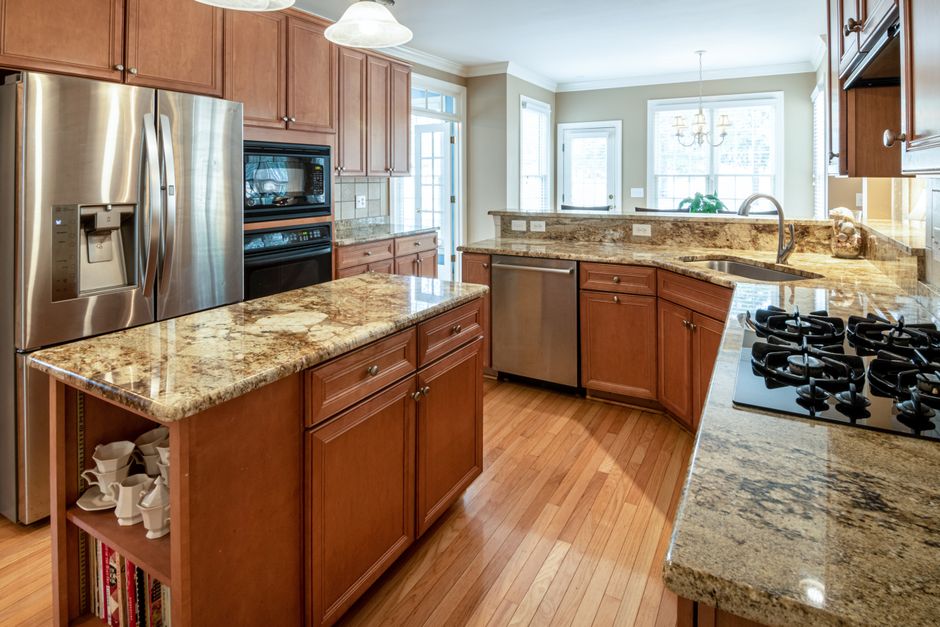
Yes, a bathroom vanity top often should be a different material than the kitchen counter, because the two surfaces fight different battles. A kitchen counter takes impact, cutting and hot cookware. A vanity top takes standing water, steam, hard water scale, acidic cosmetics and the occasional hot curling iron. The best kitchen material is not automatically the best vanity material, and the reverse is true as well.
What a Vanity Top Actually Endures
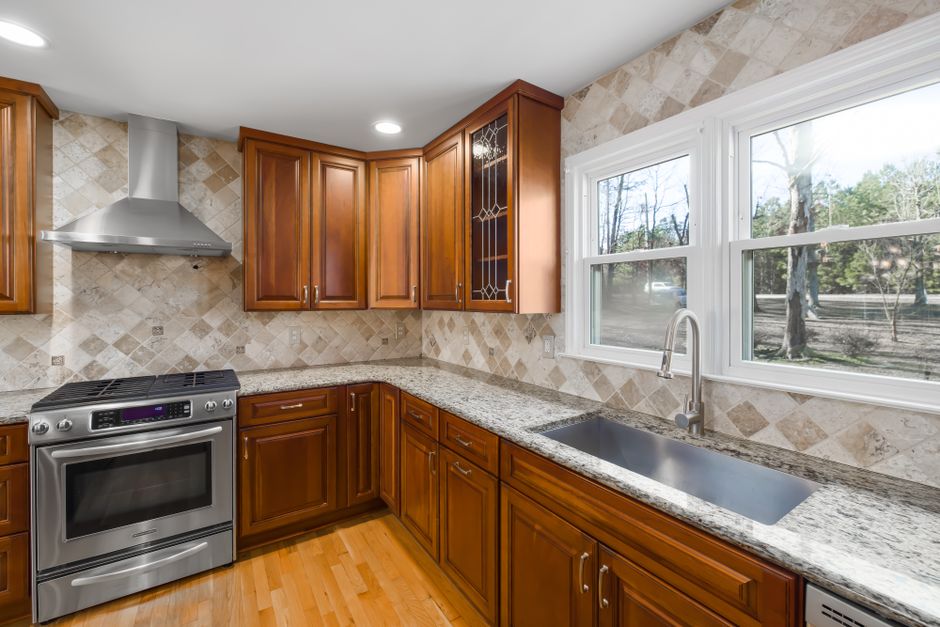
Think of a vanity as a small, wet, chemical-heavy workspace. It sees far more standing water and steam than a kitchen counter, but very little chopping, dropping or pot-setting. That shift in stress is the whole reason material choice changes.
Five pressures matter most in an Omaha bathroom:
- Moisture and steam, which attack seams, edges and any porous or layered material.
- Hard water, which leaves white scale around faucet bases and sink rims.
- Cosmetics and cleaners, many of them acidic or dyed.
- Heat from styling tools rather than cookware.
- Scale: small tops, shallow cabinets and tight sink cutouts.
Hard Water Changes the Cleaning Routine
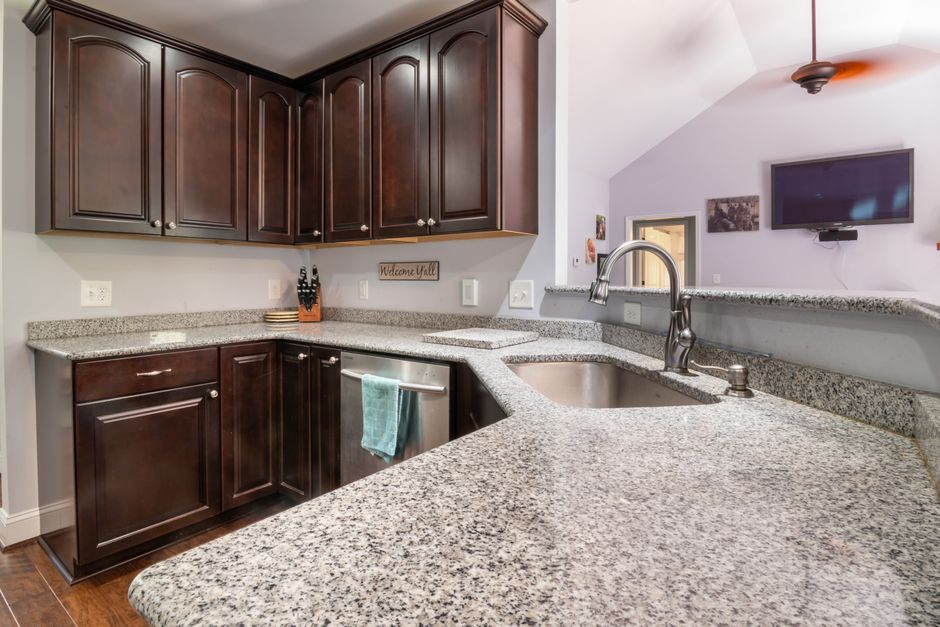
Omaha municipal water is hard, so mineral scale collects around the faucet, along the sink rim and at the backsplash joint. The question for any material is whether you can descale it without hurting it.
That is where calcite stones become a risk. Vinegar, acidic descalers and many bath and tile cleaners etch marble, limestone and travertine on contact, leaving dull spots that sealer does not prevent. In hard water, owners of these stones feel a steady pull toward exactly the products that damage them. That is a strong argument for a different material in the bathroom, even if marble looks beautiful in the kitchen.
Vinegar is not a safe all-purpose cleaner for every vanity top. If a material is not calcite-based, still check what the maker recommends before using any acid. The easiest habit for any top is wiping it dry daily so scale never builds.
Toilet bowl cleaners are strongly acidic, too. Overspray or drips onto a nearby marble or limestone top will etch it. Store and use them away from the vanity, and rinse any splash right away.
Cosmetics Are the Hidden Stress Test
Toners, some perfumes, mouthwash, hair dye, self tanner and nail polish are acidic, dyed or oily. On porous stone they etch or stain. On light resin surfaces, dyes can leave marks if they sit. Wipe spills promptly on any material.
Engineered stone, which is quartz bound with resin, is nonporous and resists most cosmetic stains without sealing. That makes it one of the lowest-maintenance vanity choices. Brands such as Cambria fall in this category. Its weak point is the resin: strong alkaline cleaners or harsh solvents left in contact can dull it.
Heat: Styling Tools Count
Heat on a vanity comes from flat irons, curling irons and hair tools, not pots. The damage still looks the same. Resin-based surfaces, including engineered stone, solid surface and cultured marble, can scorch or discolor under high heat. Engineered stone is not heatproof, and a hot curling iron can hurt it. A silicone heat mat or a wall holder solves the problem cheaply.
Material by Material for a Vanity
Solid surface
Solid surface, made from acrylic or polyester resin and sold under names like Corian and Avonite, suits bathrooms well. It can be made with an integral sink, so there is no seam to collect grime. Light scratches, scorch marks and some stains can often be sanded and refinished. Next to a kitchen range it is a weaker choice, but in a bath that tradeoff matters much less.
Engineered stone
Engineered stone is a top pick for low upkeep, with one safety note. It contains a high level of crystalline silica (silicon dioxide), and dust from cutting or grinding can cause silicosis. Ask that any cutting or polishing be done wet and not by dry cutting inside your home. A finished, installed top does not release dust in normal use.
Granite
Granite varies widely by slab. To test porosity, leave a few drops of water on the surface for several minutes. If the spot darkens, the stone absorbs liquid and should be sealed before it meets hair oils, dyes and lotions. Retest periodically and reseal only when water starts soaking in again. There is no single fixed schedule that fits every slab.
Finish matters. A flamed finish, the thermal texturing known as stone flaming, leaves a rough surface that traps soap scum, toothpaste and scale. It suits patios and steps better than a vanity. Choose polished or honed for a bathroom.
Marble
Marble can work if you accept etching as part of its character. A honed finish hides etch marks far better than a high polish, which shows every dull spot from cosmetics or cleaners. Sealing does not protect marble from acid etching, so sealer is not a fix for a bathroom full of acidic products.
Cultured marble
Cultured marble is cast resin and filler with a glossy gelcoat, often with a molded bowl. It is not real marble or natural stone. Abrasive powders and scouring pads wear through the gelcoat, so use only nonabrasive cleaners. Fine cracks called crazing around the drain usually come from repeated thermal shock, like very hot water poured into a cold bowl, or from installation stress. Check the drain area when buying a used home, because crazing tends to spread and lets water stain the material underneath.
Laminate
Laminate fails where water reaches the particleboard core: at faucet holes, the sink cutout, seams and the back edge. Look for swelling or lifting in those spots. When installing, seal every cut edge and keep caulk joints intact.
Glass
Clear or frosted glass is nonporous and easy to sanitize. With Omaha's hard water, though, it shows spots and scale almost at once. Plan on wiping or squeegeeing it dry after each use.
Wood and butcher block
Butcher block can serve as a vanity top only with a fully waterproof finish maintained on every surface, including the cutout and underside. Omaha's dry, furnace-heated winters and humid summers make wood shrink and swell through the year, so leave room for movement and avoid undermount sinks in wood.
Sink Style Narrows the Field
The sink drives the material as much as the bathroom does.
- Undermount: The cutout edge must be finishable and waterproof throughout, which points to stone, engineered stone or solid surface. Standard laminate over particleboard is a poor match. The caulk bead between sink and top eventually fails, so inspect it yearly and replace it when it cracks or darkens, before water reaches the cabinet below.
- Vessel: The rim sits above the top, so pair it with a lower vanity or plan the counter height accordingly, and choose a taller or wall-mounted faucet.
- Integral: Solid surface and cultured marble can mold the bowl into the top, removing the joint entirely.
Decide on the sink and faucet before fabrication. The hole pattern, whether single hole, widespread or wall mount, gets cut into the slab.
Scale Works in Your Favor
Vanity cabinets are normally shallower than kitchen base cabinets, and many tops are small. That makes slab remnants from kitchen jobs a practical source. Confirm the remnant is large enough for the full top plus backsplash, that any seam can sit away from the sink, and that the cabinet can support it. A leftover piece is not automatically usable.
Older Omaha Homes Need a Level Check
Many older homes in Dundee, Benson and Florence have plaster walls that are out of plumb and floors that have settled. Before ordering, check that the vanity is level and the wall is straight. A stone or engineered stone top needs a level, rigid cabinet and a scribed or caulked sidesplash, or it can crack or leave gaps.
Mildew Lives in the Joints
Mildew usually grows in the caulk at the backsplash and around the sink, not on the top itself. Use mildew-resistant silicone, run the exhaust fan during and after showers, and recaulk when the bead discolors or pulls away.
So, Same Material or Different?
Matching is fine when the kitchen material is nonporous and the bathroom habits are gentle, such as an engineered stone in both rooms with a heat mat for the flat iron. Splitting makes sense when the kitchen has marble or a rustic wood top that would not survive daily hard water, acidic products and steam. For most Omaha bathrooms, solid surface or engineered stone gives the most forgiving result, and a trusted local fabricator can confirm sink fit, cutouts and cabinet support before anything is cut.