Countertops in Omaha, NE
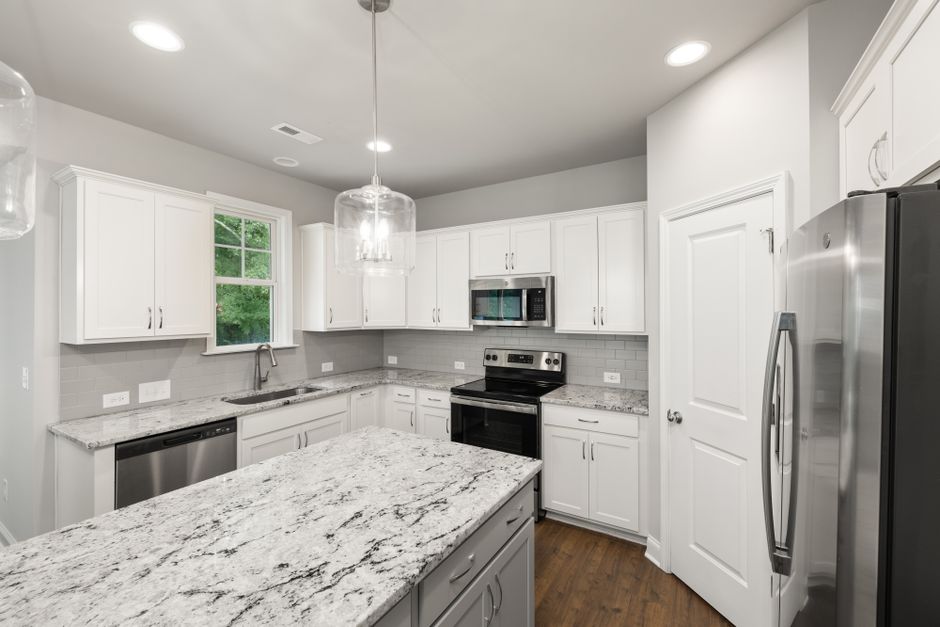
A plain guide to countertops for Omaha homeowners, covering materials, preparation, installation, and repairs, with practical notes on hard water, dry winters, humid summers, and older homes around Douglas County.
What We Cover
- Which countertop material handles hard water best? How quartz, granite, marble, soapstone, laminate, and wood respond to mineral deposits, cleaners, and daily use around the sink.
- Does Omaha weather affect countertop installation? How cold snaps, icy walkways, humid summers, and dry indoor winter air can affect delivery, adhesives, and wood countertops.
- What happens during countertop fabrication and installation? A step by step look at how a countertop moves from measuring and slab layout through cutting, setting, seaming, and sink hookup.
- Why is my countertop staining, cracking, or separating? Learn to tell etching from staining and identify common causes of mineral buildup, cracks, chips, and separating seams.
- How do I choose a countertop fabricator or installer? Useful questions about slabs, seams, overhang support, removal, and written scope when comparing countertop work in Douglas County.
- How do I prepare my kitchen for new countertops? What to finish, clear, and decide before templating and installation day, including extra checks for older Omaha homes.
Countertops in Omaha, NE
A countertop job in Omaha follows a set order: choose the material, prepare the kitchen, template, fabricate, install, then care for the surface. This site is an informational guide for homeowners in Omaha and across Douglas County, from neighborhoods near Henry Doorly Zoo to the western edges of town.
Local conditions shape each step. Winters are cold, summers are humid, and indoor humidity swings widely between them. Many homes have mineral-rich water, and older houses often have floors and walls that are no longer level or square.
Choosing a Material and Preparing the Kitchen
Choose the material by how the kitchen is used and what the water does to it. Mineral-rich water leaves film around faucets and sinks, and it shows differently on dark, light, polished, and honed surfaces. Marble, seen locally at the Joslyn Art Museum as a building stone, behaves differently under daily kitchen acids and wet work.
Prepare the kitchen before the crew arrives. Empty the cabinets along the run and clear the counters. Cabinets should be fastened and as level as the room allows, since the top is only as flat as its support.
Templating, Fabrication, and Installation
Templating records the exact shape of the run, and it is where crooked walls and sloping floors get caught. In an older house, the template follows the actual wall rather than the drawing, and cutouts are marked from the real sink and cooktop.
Fabrication cuts and finishes the slab to that template in the shop. Installation then sets it on the cabinets, with seams pulled tight and shims under low spots. In the Old Market, loft conversions in historic brick buildings can mean tight access and uneven floors, so the route in gets planned before the slab moves.
Care Through the Seasons
Wipe water spots and mineral film off promptly, and use cleaners suited to the material. Seasonal humidity shifts move cabinets and walls slightly, which can open a seam or a hairline crack over time.
Guides
The guides on this site cover six topics: preparing a kitchen for new countertops, which material handles hard water best, what happens during fabrication and installation, whether Omaha weather affects installation, why a countertop stains, cracks, or separates, and how to choose a fabricator or installer.
Latest Guides
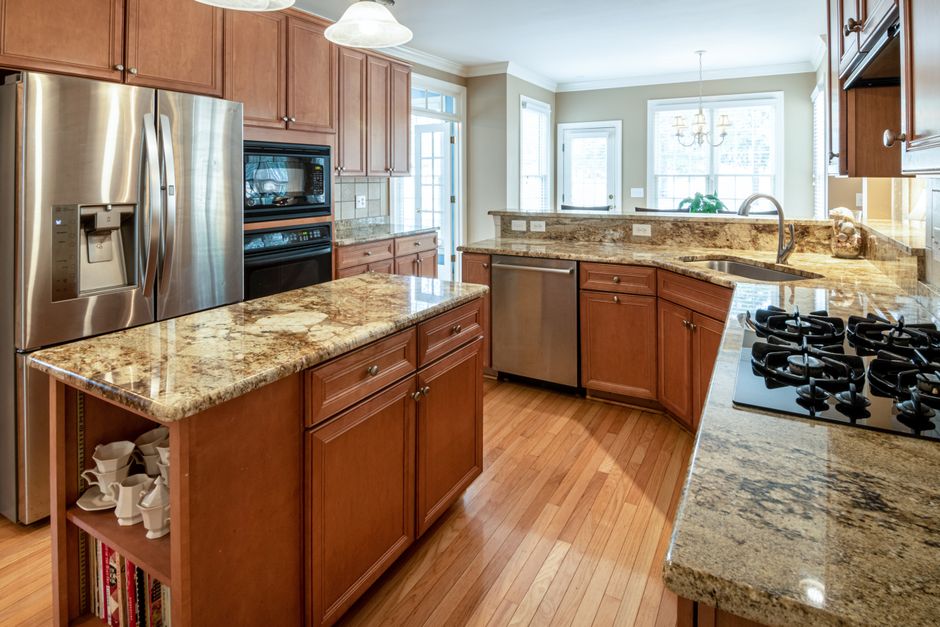
Omaha Bathroom Vanity Top Material: Why It Differs From Kitchen Counters
2026-11-09
Yes, a bathroom vanity top often should be a different material than the kitchen counter, because the two surfaces fight different battles. A kitchen counter takes impact, cutting and hot cookware. A vanity top takes standing water, steam, hard water scale, acidic cosmetics and the occasional hot curling iron. The best kitchen material is not automatically the best vanity material, and the reverse is true as well.
What a Vanity Top Actually Endures
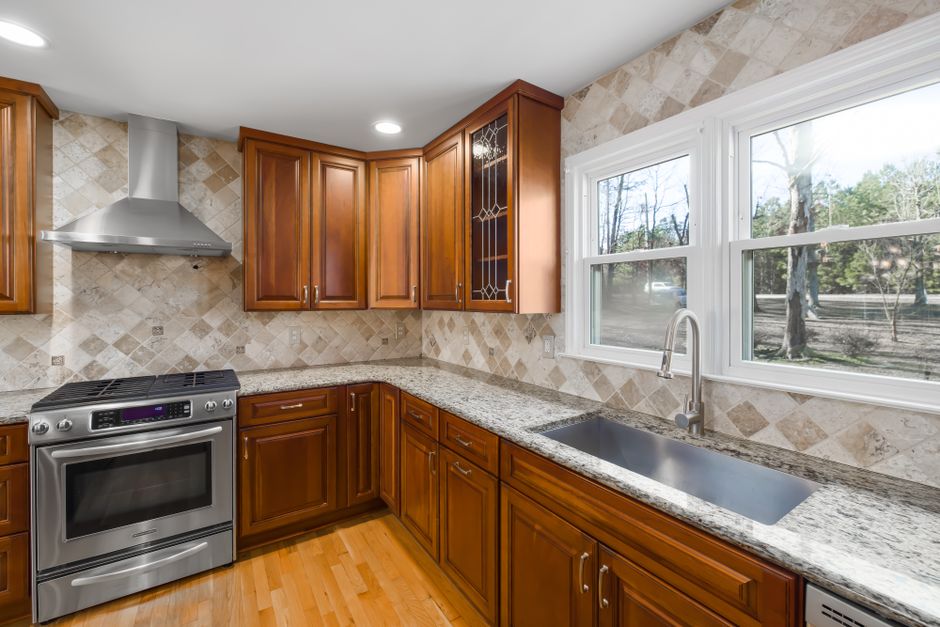
Think of a vanity as a small, wet, chemical-heavy workspace. It sees far more standing water and steam than a kitchen counter, but very little chopping, dropping or pot-setting. That shift in stress is the whole reason material choice changes.
Five pressures matter most in an Omaha bathroom:
- Moisture and steam, which attack seams, edges and any porous or layered material.
- Hard water, which leaves white scale around faucet bases and sink rims.
- Cosmetics and cleaners, many of them acidic or dyed.
- Heat from styling tools rather than cookware.
- Scale: small tops, shallow cabinets and tight sink cutouts.
Hard Water Changes the Cleaning Routine
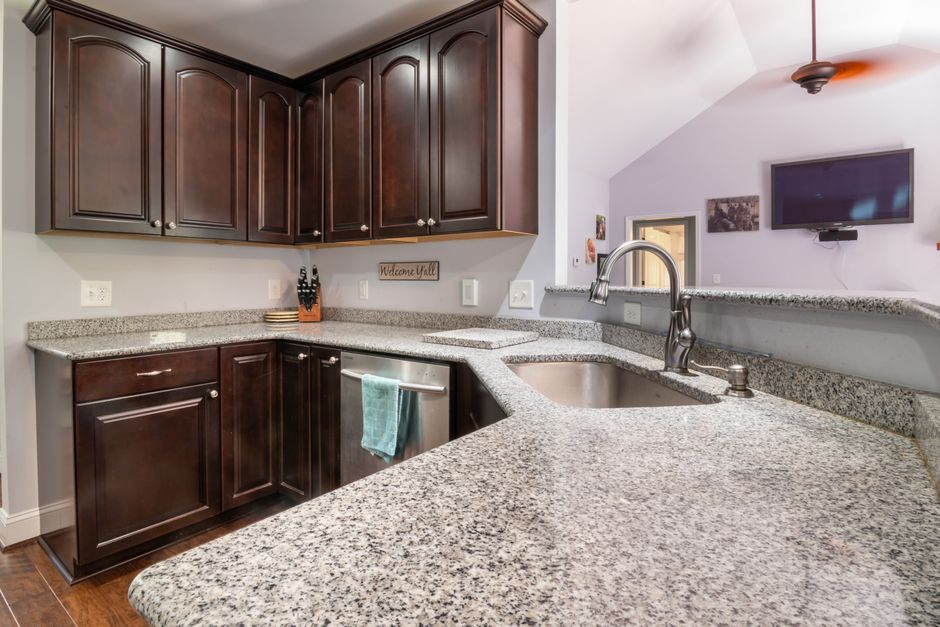
Omaha municipal water is hard, so mineral scale collects around the faucet, along the sink rim and at the backsplash joint. The question for any material is whether you can descale it without hurting it.
That is where calcite stones become a risk. Vinegar, acidic descalers and many bath and tile cleaners etch marble, limestone and travertine on contact, leaving dull spots that sealer does not prevent. In hard water, owners of these stones feel a steady pull toward exactly the products that damage them. That is a strong argument for a different material in the bathroom, even if marble looks beautiful in the kitchen.
Vinegar is not a safe all-purpose cleaner for every vanity top. If a material is not calcite-based, still check what the maker recommends before using any acid. The easiest habit for any top is wiping it dry daily so scale never builds.
Toilet bowl cleaners are strongly acidic, too. Overspray or drips onto a nearby marble or limestone top will etch it. Store and use them away from the vanity, and rinse any splash right away.
Cosmetics Are the Hidden Stress Test
Toners, some perfumes, mouthwash, hair dye, self tanner and nail polish are acidic, dyed or oily. On porous stone they etch or stain. On light resin surfaces, dyes can leave marks if they sit. Wipe spills promptly on any material.
Engineered stone, which is quartz bound with resin, is nonporous and resists most cosmetic stains without sealing. That makes it one of the lowest-maintenance vanity choices. Brands such as Cambria fall in this category. Its weak point is the resin: strong alkaline cleaners or harsh solvents left in contact can dull it.
Heat: Styling Tools Count
Heat on a vanity comes from flat irons, curling irons and hair tools, not pots. The damage still looks the same. Resin-based surfaces, including engineered stone, solid surface and cultured marble, can scorch or discolor under high heat. Engineered stone is not heatproof, and a hot curling iron can hurt it. A silicone heat mat or a wall holder solves the problem cheaply.
Material by Material for a Vanity
Solid surface
Solid surface, made from acrylic or polyester resin and sold under names like Corian and Avonite, suits bathrooms well. It can be made with an integral sink, so there is no seam to collect grime. Light scratches, scorch marks and some stains can often be sanded and refinished. Next to a kitchen range it is a weaker choice, but in a bath that tradeoff matters much less.
Engineered stone
Engineered stone is a top pick for low upkeep, with one safety note. It contains a high level of crystalline silica (silicon dioxide), and dust from cutting or grinding can cause silicosis. Ask that any cutting or polishing be done wet and not by dry cutting inside your home. A finished, installed top does not release dust in normal use.
Granite
Granite varies widely by slab. To test porosity, leave a few drops of water on the surface for several minutes. If the spot darkens, the stone absorbs liquid and should be sealed before it meets hair oils, dyes and lotions. Retest periodically and reseal only when water starts soaking in again. There is no single fixed schedule that fits every slab.
Finish matters. A flamed finish, the thermal texturing known as stone flaming, leaves a rough surface that traps soap scum, toothpaste and scale. It suits patios and steps better than a vanity. Choose polished or honed for a bathroom.
Marble
Marble can work if you accept etching as part of its character. A honed finish hides etch marks far better than a high polish, which shows every dull spot from cosmetics or cleaners. Sealing does not protect marble from acid etching, so sealer is not a fix for a bathroom full of acidic products.
Cultured marble
Cultured marble is cast resin and filler with a glossy gelcoat, often with a molded bowl. It is not real marble or natural stone. Abrasive powders and scouring pads wear through the gelcoat, so use only nonabrasive cleaners. Fine cracks called crazing around the drain usually come from repeated thermal shock, like very hot water poured into a cold bowl, or from installation stress. Check the drain area when buying a used home, because crazing tends to spread and lets water stain the material underneath.
Laminate
Laminate fails where water reaches the particleboard core: at faucet holes, the sink cutout, seams and the back edge. Look for swelling or lifting in those spots. When installing, seal every cut edge and keep caulk joints intact.
Glass
Clear or frosted glass is nonporous and easy to sanitize. With Omaha's hard water, though, it shows spots and scale almost at once. Plan on wiping or squeegeeing it dry after each use.
Wood and butcher block
Butcher block can serve as a vanity top only with a fully waterproof finish maintained on every surface, including the cutout and underside. Omaha's dry, furnace-heated winters and humid summers make wood shrink and swell through the year, so leave room for movement and avoid undermount sinks in wood.
Sink Style Narrows the Field
The sink drives the material as much as the bathroom does.
- Undermount: The cutout edge must be finishable and waterproof throughout, which points to stone, engineered stone or solid surface. Standard laminate over particleboard is a poor match. The caulk bead between sink and top eventually fails, so inspect it yearly and replace it when it cracks or darkens, before water reaches the cabinet below.
- Vessel: The rim sits above the top, so pair it with a lower vanity or plan the counter height accordingly, and choose a taller or wall-mounted faucet.
- Integral: Solid surface and cultured marble can mold the bowl into the top, removing the joint entirely.
Decide on the sink and faucet before fabrication. The hole pattern, whether single hole, widespread or wall mount, gets cut into the slab.
Scale Works in Your Favor
Vanity cabinets are normally shallower than kitchen base cabinets, and many tops are small. That makes slab remnants from kitchen jobs a practical source. Confirm the remnant is large enough for the full top plus backsplash, that any seam can sit away from the sink, and that the cabinet can support it. A leftover piece is not automatically usable.
Older Omaha Homes Need a Level Check
Many older homes in Dundee, Benson and Florence have plaster walls that are out of plumb and floors that have settled. Before ordering, check that the vanity is level and the wall is straight. A stone or engineered stone top needs a level, rigid cabinet and a scribed or caulked sidesplash, or it can crack or leave gaps.
Mildew Lives in the Joints
Mildew usually grows in the caulk at the backsplash and around the sink, not on the top itself. Use mildew-resistant silicone, run the exhaust fan during and after showers, and recaulk when the bead discolors or pulls away.
So, Same Material or Different?
Matching is fine when the kitchen material is nonporous and the bathroom habits are gentle, such as an engineered stone in both rooms with a heat mat for the flat iron. Splitting makes sense when the kitchen has marble or a rustic wood top that would not survive daily hard water, acidic products and steam. For most Omaha bathrooms, solid surface or engineered stone gives the most forgiving result, and a trusted local fabricator can confirm sink fit, cutouts and cabinet support before anything is cut.
Countertop Overlay in Omaha: When It Works and When to Tear Out
2026-11-07
Yes, new countertops can sometimes be installed over existing ones, but only when the old top is flat, firmly attached, dry, and in a layout you plan to keep. If any one of those four conditions fails, the overlay inherits the problem. Most Omaha kitchens that qualify have square-edge laminate or well-bonded tile with level grout lines.
The decision comes down to a short list of checks. Work through them in order, because an early failure usually saves you from the later ones.
Start With the Old Top
Is it flat?
Run a long straightedge or a 6 foot level along the front, along the back, and across each run. Mark every dip and hump with tape. Many stone fabricators aim for about 1/8 inch of variation over 10 feet, but the limit that counts is the one set by your installer and the product maker. A new surface follows the shape underneath it. It does not level a wavy base.
Is it dry and solid?
Probe around the sink, dishwasher, and seams with an awl or screwdriver. Swollen, soft, or crumbling particleboard usually points to past water damage. Covering it leaves moisture and any mold in place and gives the new top a weak foundation. Sealing over water damage does not stop it.
Then press down and try to rock the existing top at corners and overhangs. Any movement, hollow sound, or loose tile needs to be fixed first. The overlay can only be as stable as the layer beneath it.
Is the surface ready for bonding?
Overlay makers typically call for degreasing, scuff sanding, and filling low spots. Kitchen grease and old polish weaken adhesive bonds, and an adhesive not approved for that surface can fail or stain light materials. Follow the product maker's instructions rather than a general rule.
Weight and Cabinet Strength

An overlay adds load; it never replaces the old load. As rough figures, 3 cm granite or quartz runs about 18 to 20 pounds per square foot, and 2 cm stone about 12 to 13. Thin overlay panels are often much lighter, but the old top stays in place and its weight adds to the total.
Empty the cabinets and look inside with a flashlight. Warning signs include:
- Bowed cabinet sides
- Separated face frames
- Loose corner blocks
- Water-stained cabinet bases
- Doors that recently started to bind
Older particleboard boxes that have seen leaks are the biggest concern. Sound boxes that are level and tightly joined can often carry the extra load, while damaged boxes usually cannot. If you want full-thickness stone over an existing top, have a repair or reinforcement plan before anyone orders material. Thin panels may also need a continuous flat surface underneath rather than support only at the box edges.
Levelness Is More Than the Counter
Check the cabinet run and the floor too. Clay and loess soils around Omaha, along with older basements and settled framing, can leave runs out of level. An overlay follows that slope unless the cause is corrected underneath, and correcting it usually means removing the old top. A run that is visibly off is a vote for tear-out.
Added Height and What It Touches
Add the overlay thickness to the old top's height, including adhesive or shims. Standard counters sit around 36 inches, and a typical overlay adds about 1/4 to 1 1/4 inches. Stack boards at the sink and main prep area to feel the new height, especially if shorter cooks use the kitchen.
Then measure everything the extra height could crowd:
- Window sills behind the sink (a low sill is a common reason to reject an overlay)
- Outlets and switches
- Wall tile and backsplash
- Under-cabinet lights
- The gap below the upper cabinets
Have an electrician evaluate any outlet that a new top or backsplash would crowd.
Appliances
A slide-in or freestanding range may sit lower than the new counter, leaving a visible step. A dishwasher may need new mounting points and a filler or trim at the top. Confirm clearances in each appliance's installation manual. Drop-in cooktops need the same review: the cutout, mounting clips, gas and electrical connections, and required clearances must still match the manufacturer's instructions once the surface rises. A kitchen appliance lift or similar built-in hardware needs a check for mounting and door clearance as well.
Edge Details
Look at the existing edge profile. Rounded post-form laminate nosings, coved backsplashes, and raised marine edges often have to be cut off or replaced because a flat panel cannot sit cleanly on them. In those cases the overlay stops being a simple cover-up.
Overlay systems usually hide the old top with a thicker built-up or wrapped edge. Ask to see a sample of the finished edge. It should cover the old material completely, and the overhang should still clear drawers and doors. A visible seam line along the edge is a sign of a compromised detail. An overlay does not look identical to a full replacement, and the edge is where the difference tends to show.
Sink and Faucet Fit
Drop-in sinks
A drop-in sink rim sits on top of the old surface, so the sink has to come out. It may go back on top of the overlay if it still fits the opening and the rim is in good shape. If the sink is old, stained, or chipped, replacing it during the project is usually easier than doing it later.
Undermount sinks
Treat an undermount sink as a warning sign. The sink must sit beneath the stacked layers, so the old cutout edge has to be concealed and sealed, and the support hardware may need to change. If an undermount sink is a priority, full removal usually gives a cleaner and more reliable result.
Faucets and accessories
Faucet shanks, soap dispensers, air gaps, and mounting nuts can fall out of reach under thicker layers. Check the maximum deck thickness on the spec sheet before ordering. Extension kits are not available for every model.
Material Choices and Omaha Seasons
Solid surface material such as Corian or Avonite, engineered stone such as Cambria, natural stone, and thin composite material panels each have their own thickness, weight, and installation rules. Warranty terms matter too, so confirm that the product warranty allows installation over an existing surface.
Omaha's humid summers and dry, furnace-heated winters make wood substrates and cabinets move. Butcher block is a poor candidate for a rigid glue-down because it needs room to expand and contract. Any wood top needs fasteners that allow movement and sealing on all exposed sides.
In winter, ask how panels and adhesive will be transported and stored. Materials that ride through Omaha cold in an unheated vehicle may need time to reach room temperature, since adhesives and sealants have minimum use temperatures. Keep the house at normal temperature through the cure period the product maker lists.
Dust Safety During Cutting
Cutting or grinding engineered stone and natural stone can release respirable crystalline silica (silicon dioxide), which can cause silicosis. Shop fabrication is preferred. Any on-site work should use wet methods or proper dust capture with suitable respiratory protection, never open dry cutting in the kitchen. Engineered stone is not safe to cut on site simply because it is manufactured, or because the job is short.
Older Omaha Homes
In older neighborhoods such as Dundee, Benson, and Field Club, test before disturbing old materials. Layers of paint may contain lead, and older adhesives, flooring, or patching compounds may contain asbestos. Use a qualified lab or professional when removal could disturb suspect materials. Older walls are also often out of square, so new tops may need scribing to fit.
When Full Removal Is the Better Choice
Choose tear-out when you find any of these:
- Rot or an active leak
- Sagging cabinets
- An out-of-level run
- An unsuitable edge profile
- A low window conflict
- A layout change, a new sink type, or a wish for a seamless premium edge
Removal also lets you inspect and repair the cabinet tops and the wall behind them, which an overlay hides. It is messier, but it exposes problems that are far harder to fix after a new surface is glued down. An overlay does not always avoid mess, plumbing work, or cabinet work, and it should not be expected to be easy to remove later.
Get the Plan in Writing
Before work begins, ask for written answers to these points:
- What will be covered, and how the old top was evaluated
- Who is responsible for the sink, plumbing, and appliance reconnection
- Who handles any cabinet repairs
- Whether the product warranty allows installation over the existing surface
A clear answer to each means the overlay has been thought through. Vague answers are a good reason to price a full replacement alongside it.